 Audio Flashcards
 Peter from Audio Flashcards · 5 November 2026
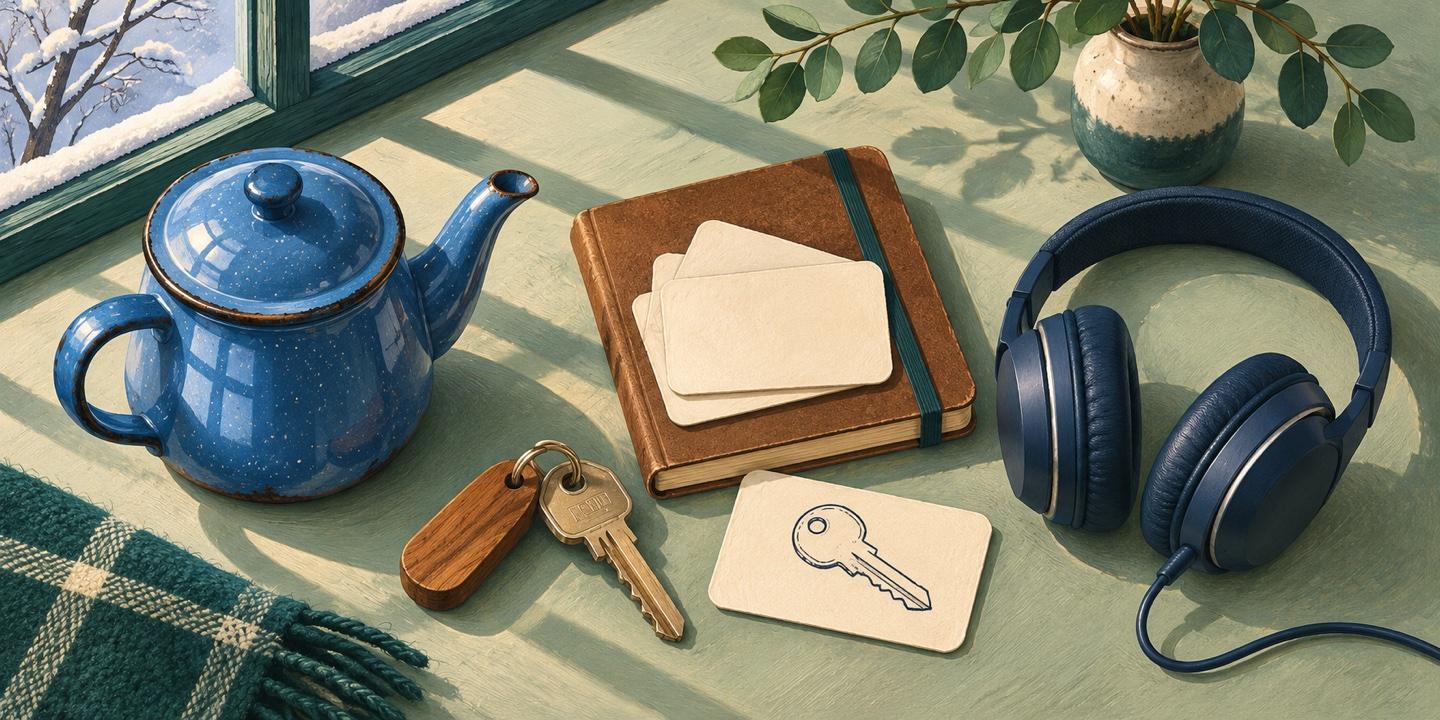
If “key” brings Schlüssel to mind but leaves you guessing between der, die and das, you already know what your next flashcard should ask. Put “the key” on one side of a card in Audio Flashcards and der Schlüssel on the other. Record the two German words together or choose a German voice to read them aloud.
Give the article a place in your review
Try three nouns you can picture in the same room: der Schlüssel (the key), die Tür (the door) and das Fenster (the window). Give each its own card, with the English prompt first. When you hear “the door,” say die Tür before playing the German side. If the noun came easily but the article slipped away, take that into account when you grade your answer. Spaced repetition uses that grade to schedule another review.
If your goal is to follow spoken German, reverse the side order for a session. Now you hear die Tür first and try to picture the door. You can do both exercises with the same three cards.
Make a second card for a sentence you use
Perhaps you remember der Schlüssel on its own, but hesitate when you need to tell someone you've found the key. Give that sentence its own card. Record “I have the key” as the prompt and Ich habe den Schlüssel as the answer. Here you hear den Schlüssel because the key is the object of habe. Keeping the original noun card gives you a chance to practise both forms.
After your next lesson, choose a sentence you actually said or wanted to say. Record it while the conversation is fresh. On your next hands-free review, see whether hearing the English prompt brings back the whole German sentence.
Try a shared German vocabulary deck
Laurenne van Dyck's German Vocabulary Cards collection includes German and English audio for everyday words. You can preview nouns such as das Badezimmer (the bathroom), der Ofen (the oven) and die Ursache (the cause), then open the deck in the app for offline review. Listen to the shared German vocabulary flashcards.